HomeTravel BlogKarnak & Luxor Temples and Avenue of Sphinxes Ultimate Guide: Theban East Bank
Exclusive Travel Guide
Karnak & Luxor Temples and Avenue of Sphinxes Ultimate Guide: Theban East Bank
The definitive guide to Luxor's East Bank. Explore the colossal 134-column Hypostyle Hall at Karnak, the 3km Avenue of Sphinxes, and illuminated Luxor Temple by night with Luxor Star.
Luxor Star Team
October 18, 2026• 8 min read
Share:
1. Introduction: The Sacred Realm of the Living
On the eastern bank of the River Nile where the sun rises daily, the pharaohs erected the greatest concentration of monumental religious architecture in antiquity. While the West Bank was the shadowy necropolis of royal tombs and mortuary shrines, the East Bank was the vibrant capital of living gods, monumental festivals, and state ceremonies.
The Karnak Temple Complex stands as the largest religious complex ever constructed by mankind, developed over more than two millennia by thirty pharaohs. Connected to it via the 3-kilometer Avenue of Sphinxes is Luxor Temple. In this guide, Luxor Star Tours leads you through the glories of Thebes' East Bank.
2. Karnak Temple Complex: The Sanctuary of Amun-Ra
🏛️ The Great Hypostyle Hall:
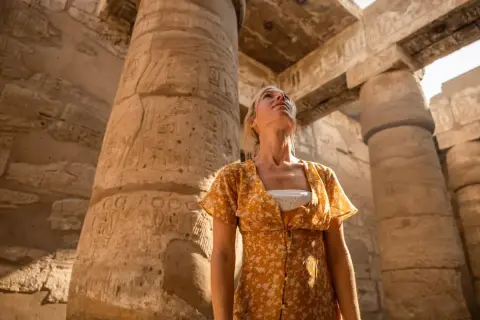
An architectural forest containing 134 towering sandstone columns arranged in 16 rows. The central columns rise 21 meters high, with capitals broad enough to accommodate 50 people standing together.
Modeled to represent the primordial swamp of creation with papyrus bud and blossom capitals.
☀️ The Obelisks of Hatshepsut & Thutmose I:
Queen Hatshepsut’s single-block pink granite obelisk, weighing nearly 300 tons, remains the tallest standing ancient obelisk in Egypt.
The Sacred Lake and colossal granite scarab beetle where pilgrims circle for good fortune.
3. The Grand Avenue of Sphinxes (Dromos)
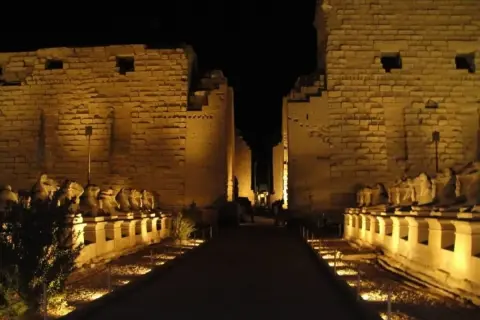
A royal ceremonial processional boulevard spanning 3 kilometers (2,700 meters) connecting Karnak in the north to Luxor Temple in the south.
Lined with more than 1,050 carved sphinxes (ram-headed symbolizing Amun-Ra and human-headed guarding the king).
Host to the grand annual Opet Festival, where divine sacred barques were transported in festive processions accompanied by musicians and priest choirs.
4. Luxor Temple: The Illuminated Jewel of the City
Commissioned by Amenhotep III and embellished by Ramesses II directly on the banks of the Nile in downtown Luxor.
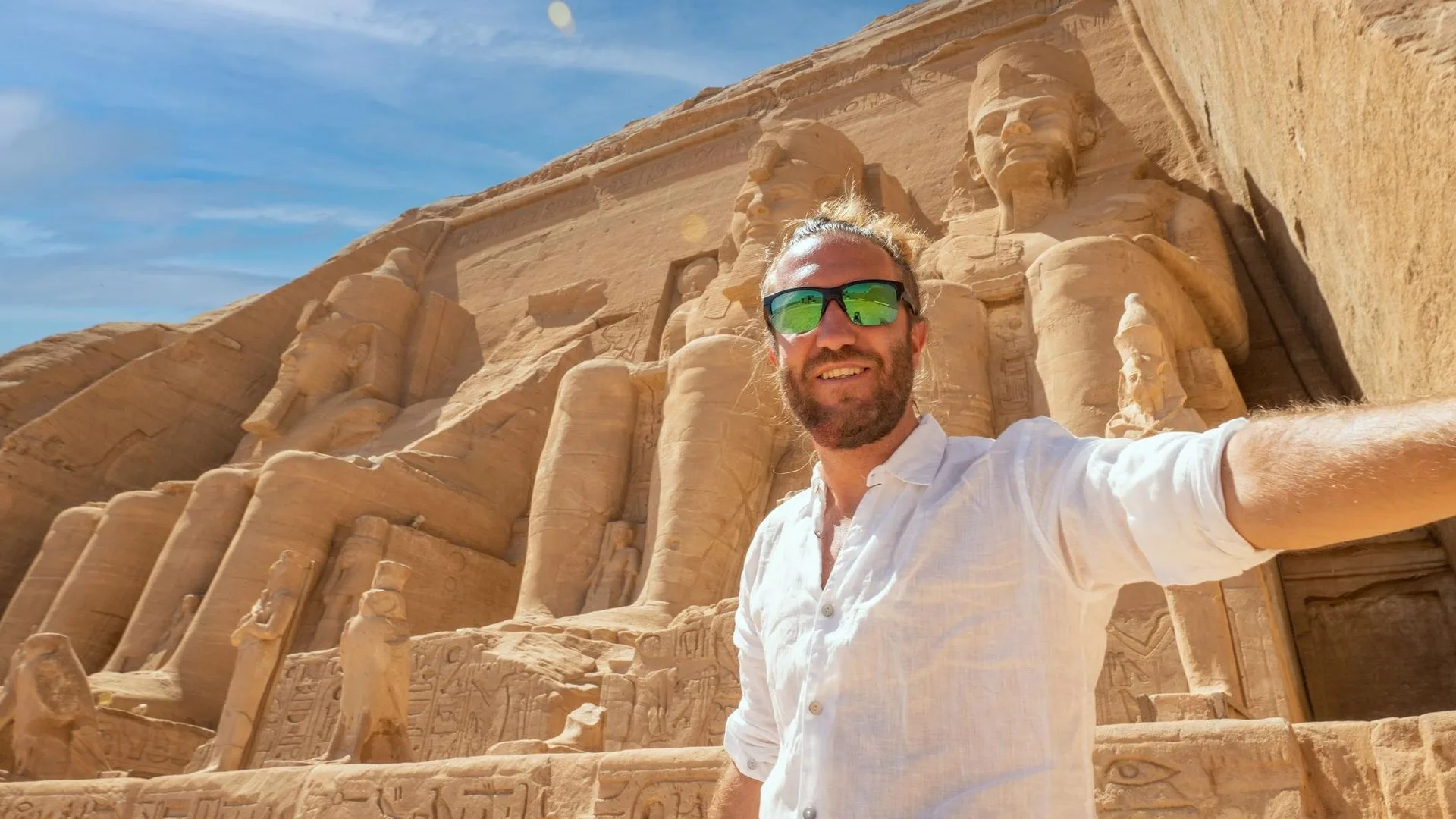
Best Experienced at Night: As dusk falls, the entire temple illuminates with golden spotlights, dramatically casting shadows across colossal seated statues of Ramesses II.
Features the twin entrance pylon with a 25-meter standing obelisk (whose partner stands in Paris's Place de la Concorde) and the historic Abu El-Haggag Mosque built directly into the upper walls.
5. Pro Traveler Tips
Timing Your Visit: Visit Karnak in late afternoon (around 03:00 PM) for golden lighting among the columns, then transition to Luxor Temple at sunset for evening illuminations.
Wide-Angle Lens: A smartphone wide-angle lens is essential to capture the sheer height of the columns.
Sound & Light Show: Attend the night spectacle at Karnak where illuminated pylons and recorded narrations bring the stones to life.